
Working Projects
Work in progress — papers under review, projects in the field, and methods I am currently building out. These currently span the housing approval process in Vancouver, urbanization and spatial structure in Sub-Saharan African cities and regions, and Chinese regional growth dynamics. Drafts are available on request.
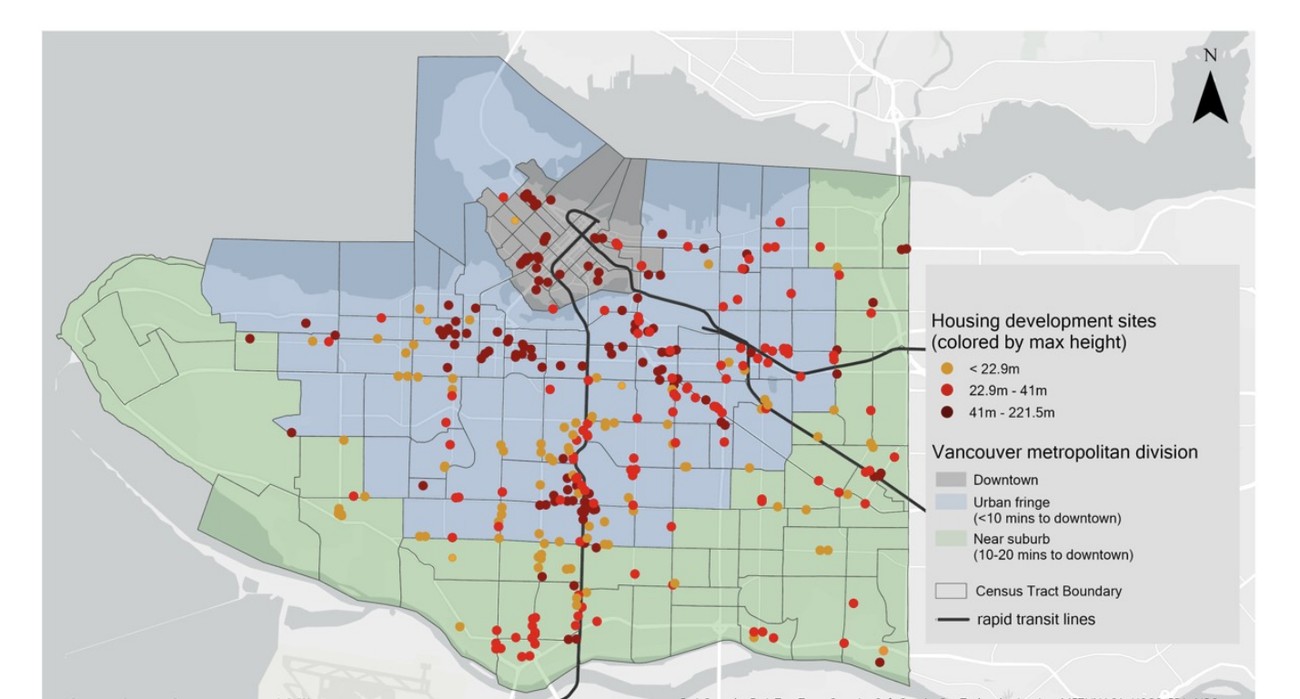
Moving beyond “how much support or opposition” to examine with more nuance how different arguments are mobilized across project types and locations. Opposition centers on neighborhood character and scale, while support emphasizes housing need and affordability.
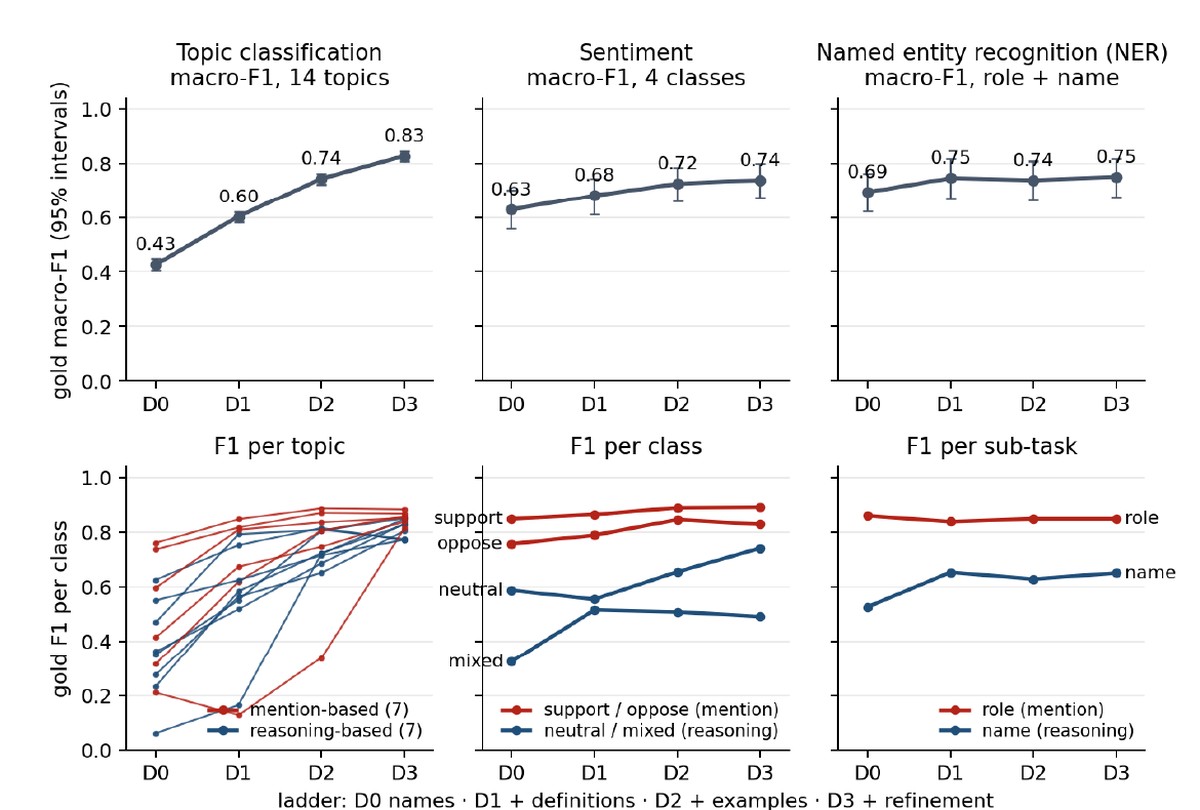
When we use large language models to read public input, where does human input actually matter — and what is left after we have done our best? We grow one prompt in four cumulative stages across 350 Vancouver rezoning projects, and at each stage measure what an hour of human work bought in accuracy.
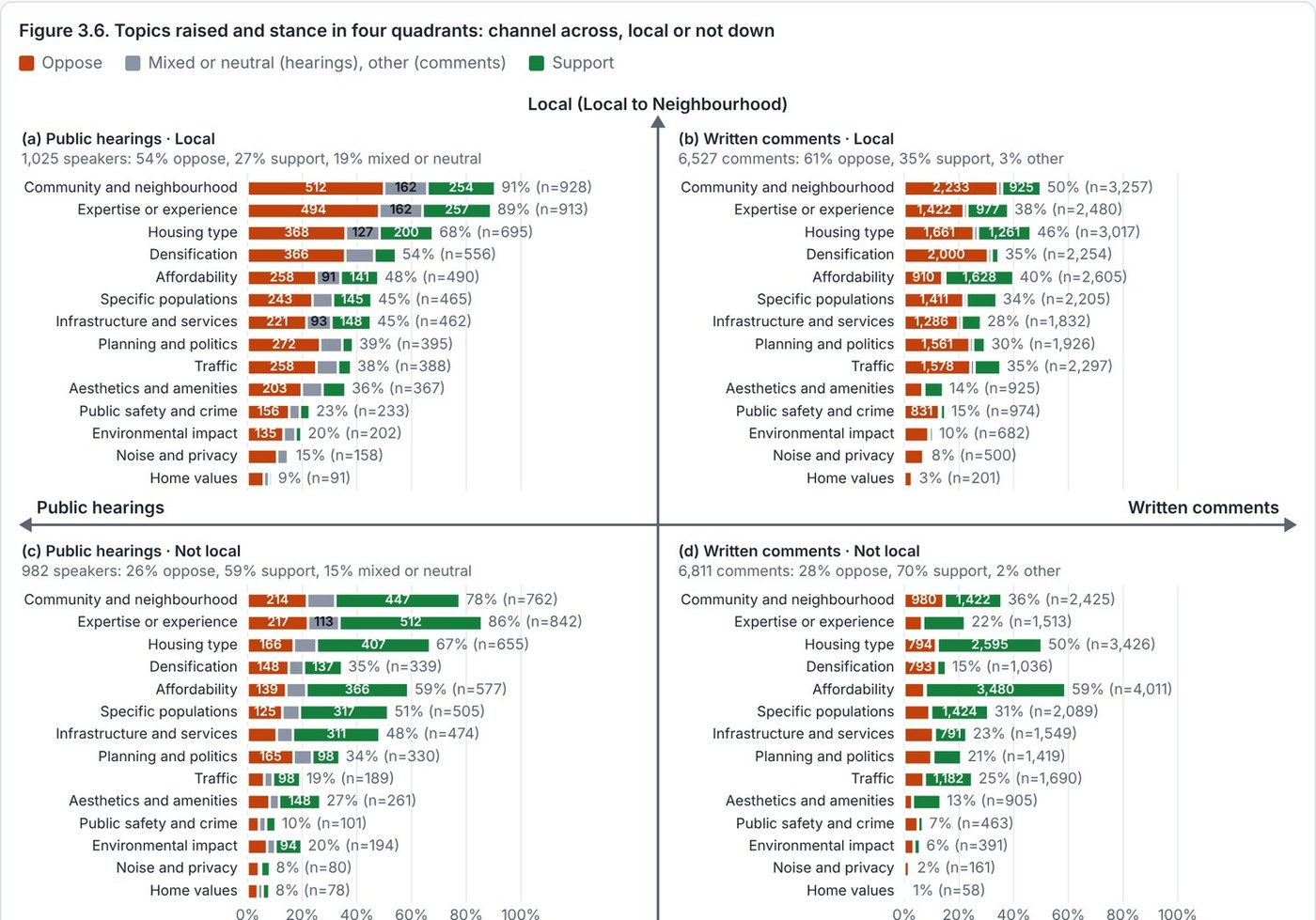
Across 285 Vancouver rezoning projects, neighbourhood residents oppose new housing at roughly twice the rate of participants from elsewhere in the city — in the hearing room and in writing alike. Proximity, not the channel, is what divides the record.
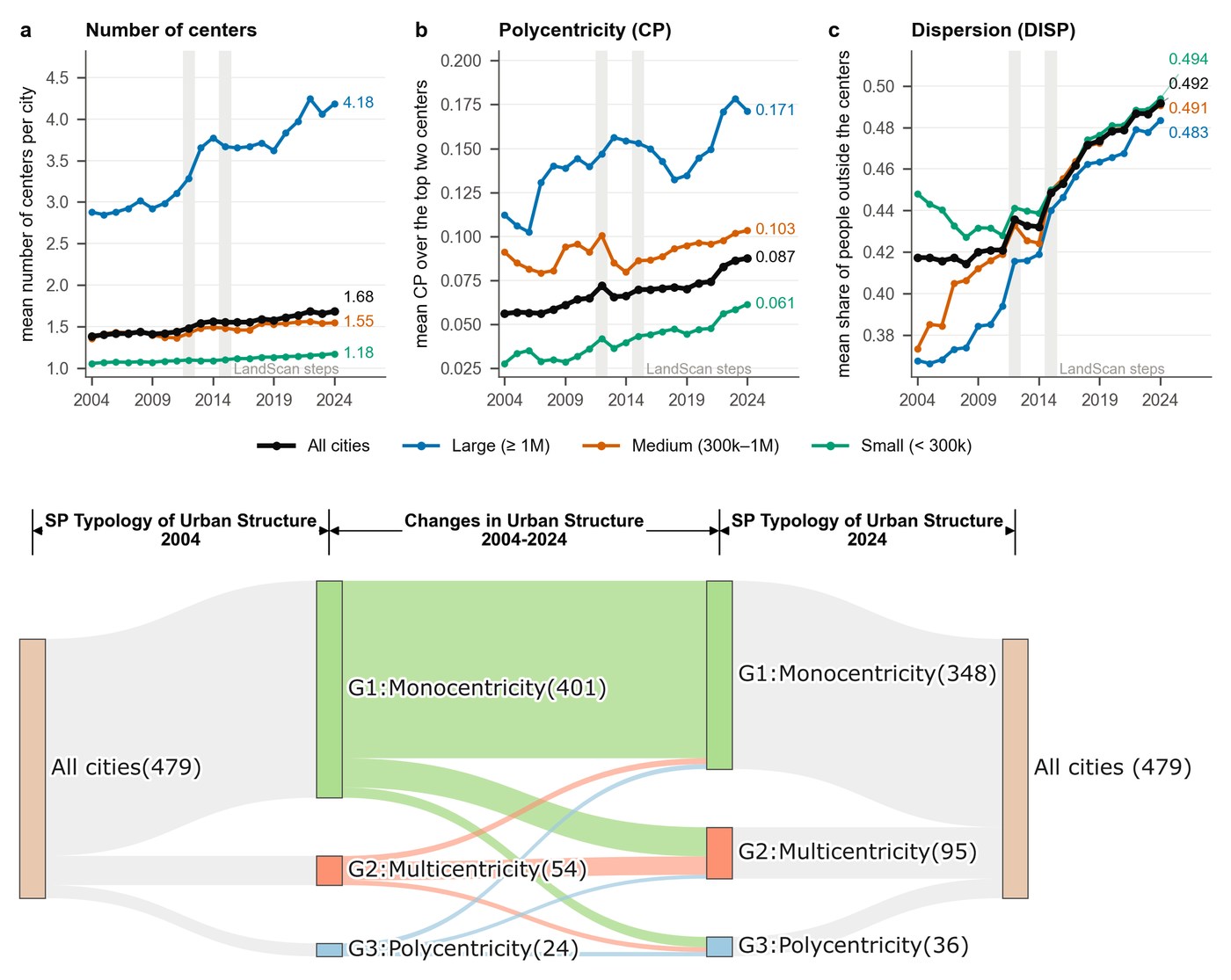
The evolution of urban spatial structure in Sub-Saharan African cities, 2004–2024
Across 482 Sub-Saharan African agglomerations tracked over two decades, the region is dispersing with some subcentering: most cities remain monocentric, but subcenters are emerging and population is moving steadily outward — the opposite of the compacting trajectory found in Chinese cities.
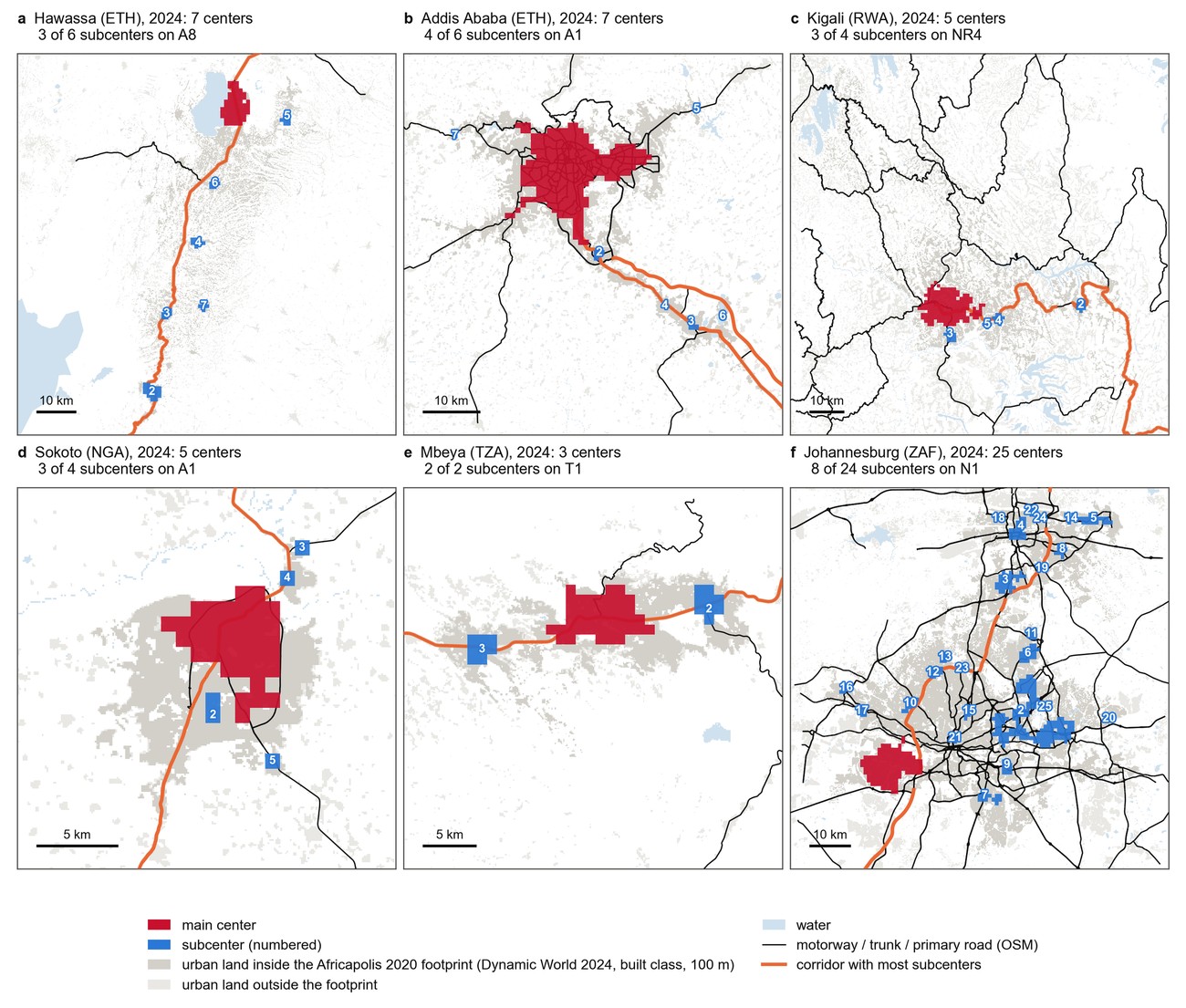
Why do some African cities grow a second center while others simply spread? Testing market forces, street supply, and local government structure against four measures of urban form across 482 cities — and finding that road-rich cities do not get more centers, but a more substantial second one.
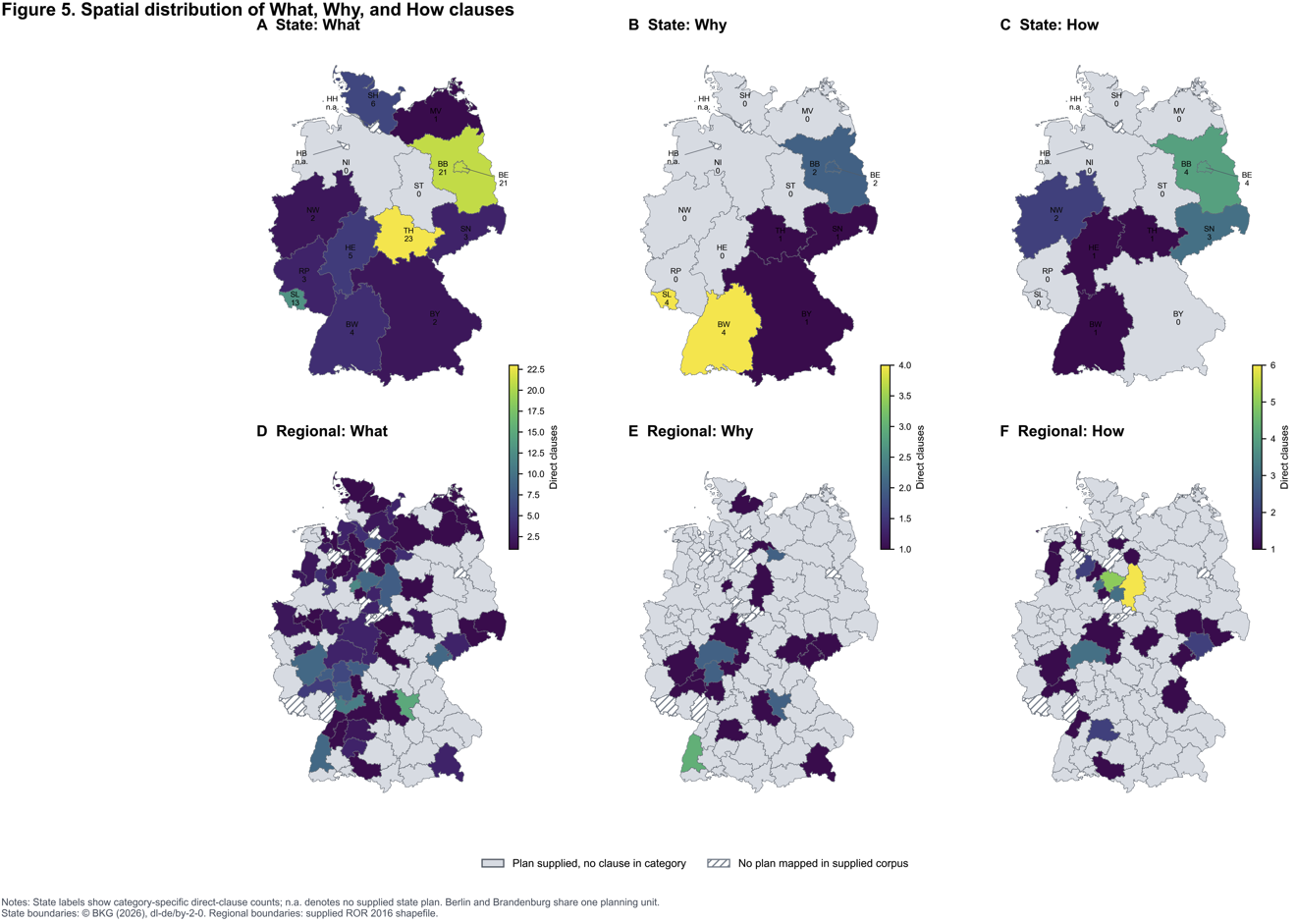
Polycentricity is one of the most frequently invoked goals in German spatial planning — but what exactly do plans commit to, on what grounds, and through which instruments? This project reads the full corpus of state (Landesentwicklungspläne) and regional (Regionalpläne) plans with a large language model, extracting and classifying every clause that invokes a polycentric spatial structure.
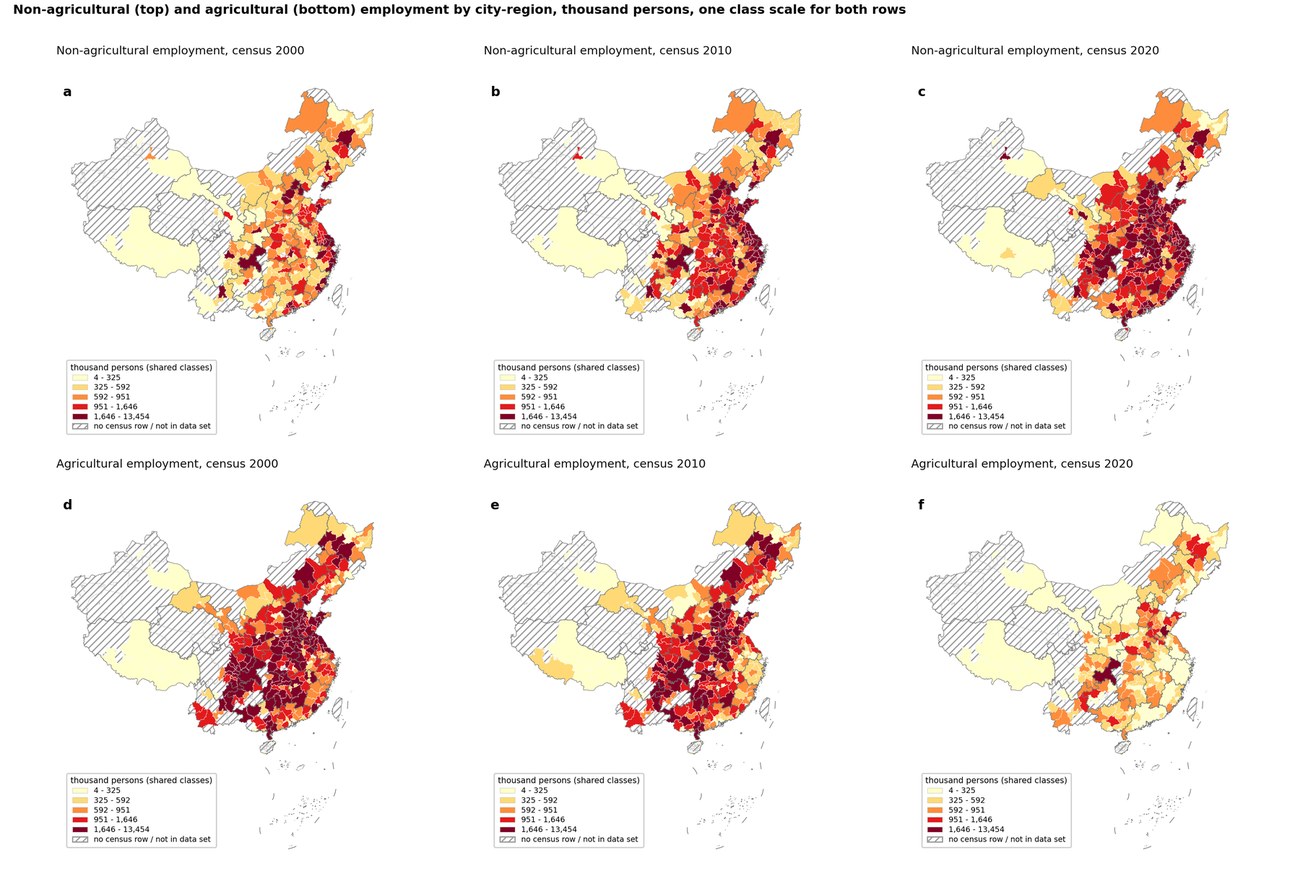
Population and Employment Dynamics in China: Evidence of a Perfect Storm Gathering
Do people move for jobs, or do jobs move for people? A regional adjustment model across Chinese city-regions, estimated separately for two intercensal periods, finds the balance shifting decisively toward amenities and skilled labor.
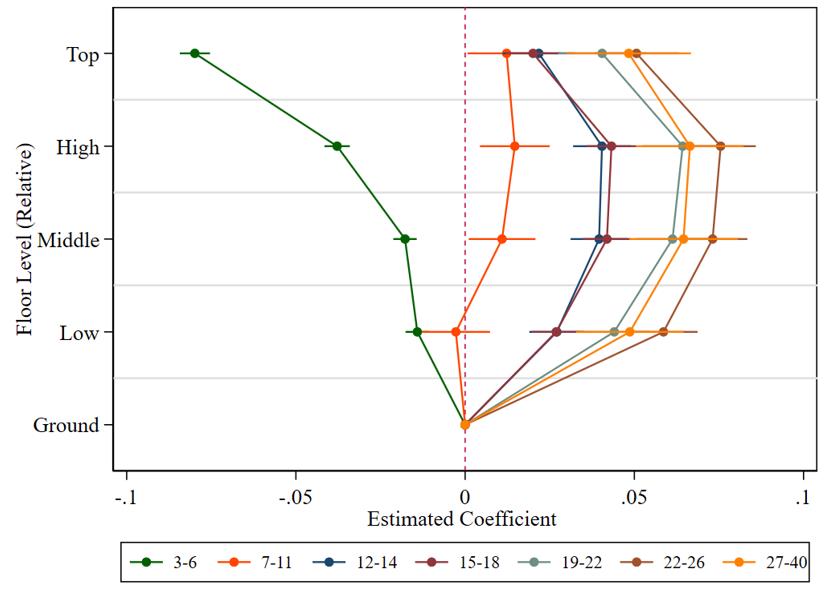
Vertical price curves in the Beijing residential housing market
Using roughly 600,000 resale records from 2012 to 2019, this paper measures the ground-floor premium and top-floor discount in Beijing, and shows how both flip with building height — and with whether the building has an elevator.