
How do people talk about new housing? Large language models and city council records in Vancouver, Canada
Vancouver is under unusual pressure to build. The City faces a provincial target of 28,900 net new homes between October 2023 and September 2028, and has been tracking at roughly 80–90% of the annual pace. At the same time, provincial legislation (notably Bills 44 and 18) is rewriting how local approvals work, including limits on public hearings for rezonings that already conform to adopted policy.
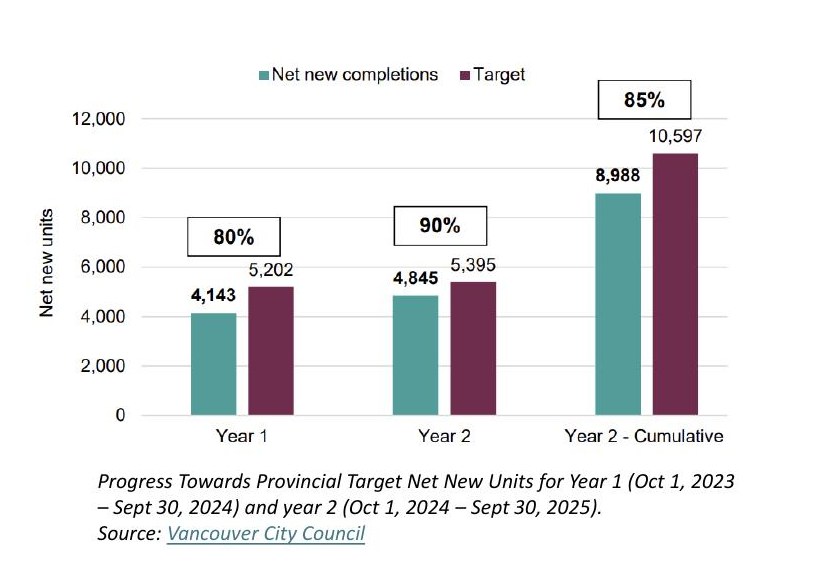
That combination makes Vancouver a useful case. Every rezoning application generates a rich and unusually complete public record: written and online feedback, staff referral reports, public hearing transcripts, and the Council decisions that follow. Those records are where the arguments about new housing actually live.
This project uses large language models to read that corpus at scale, asking:
- What narratives do residents, staff, and Council members use when they argue for or against new housing — and which ones recur across very different sites?
- Who deploys which argument, and how do the balance and framing shift between the written record, the hearing room, and the staff report?
- What happens to deliberation as the approval process itself changes — when policy-conforming projects no longer go to a public hearing, which voices and which arguments disappear from the record?
Presented at the International Conference on Urban Affairs (ICUA), Chicago, 2026. Work with Julia Harten at the University of British Columbia.