
Research
My work asks how the spatial organization of cities and city regions shapes environmental, economic, and social outcomes — and how planning institutions mediate that relationship. Papers are grouped below by theme — click a theme to expand it. A full list is also available on Google Scholar.
 Urban form, climate, and environmental quality›
How the physical configuration of city regions — density, fragmentation, greenspace, and the distribution of centers — shapes ambient heat and air pollution, and which spatial strategies actually deliver environmental gains.
2 papers
How the physical configuration of city regions — density, fragmentation, greenspace, and the distribution of centers — shapes ambient heat and air pollution, and which spatial strategies actually deliver environmental gains.
2 papers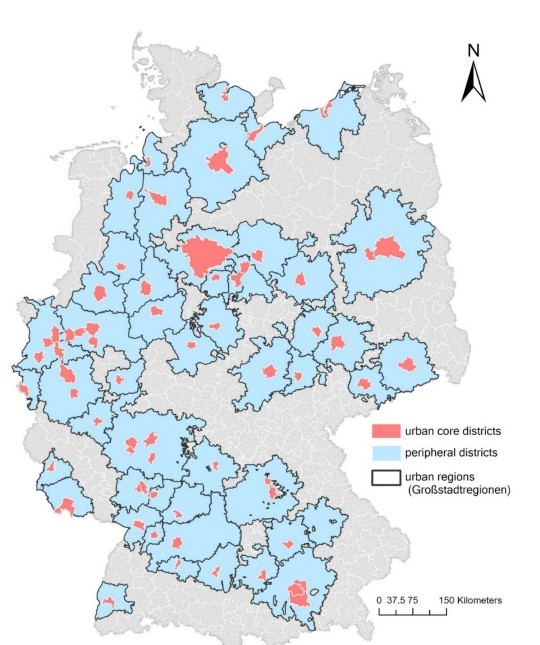
Cities · 2026
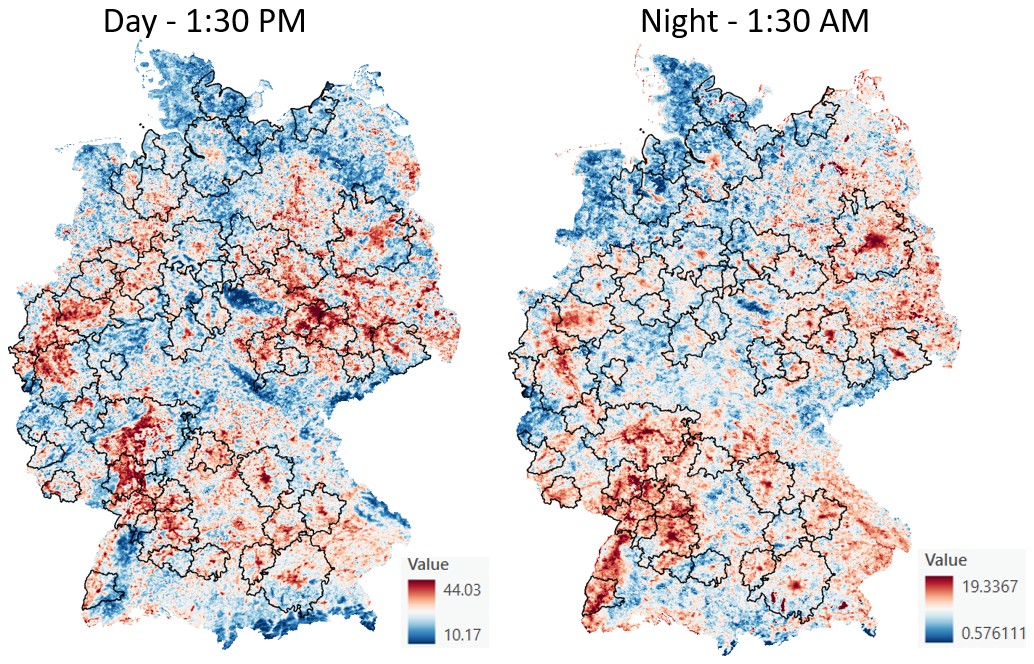
Polycentricity does not clean up regional air on its own. In larger regions it makes urban cores more polluted — the cost of the longer, more congested commuting that multiple strong centers generate.
Li, W., Schmidt, S., & Gu, J. (2026). Regional polycentric spatial patterns and air pollution: An empirical study of German metropolitan regions. Cities, 170, 106676.
Environment and Planning B: Urban Analytics and City Science · 2024
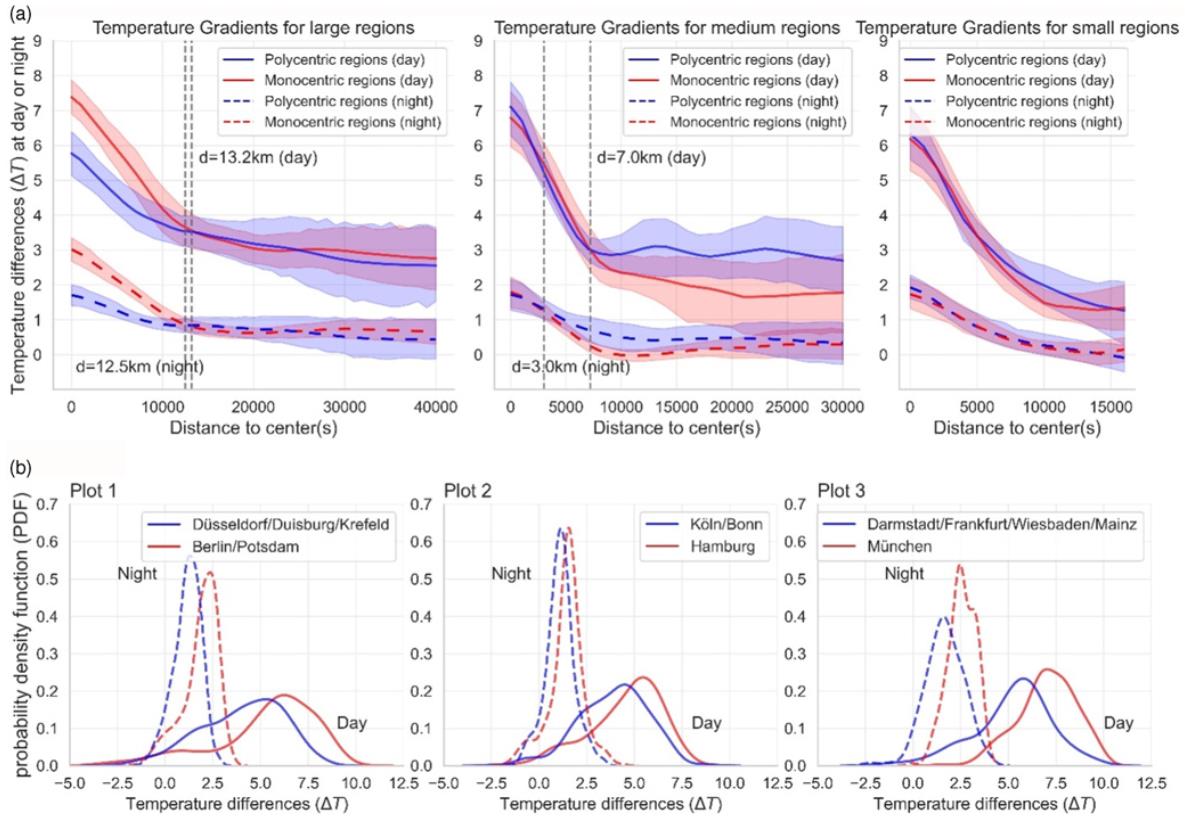
Doubling the degree of polycentricity cuts daytime urban heat by about 10% and night-time heat by about 25% in large German city regions — and many small dispersed parks cool better than one large one.
Li, W., & Schmidt, S. (2024). Can spatial patterns mitigate the urban heat island effect? Evidence from German metropolitan regions. Environment and Planning B: Urban Analytics and City Science. Advance online publication.
 Polycentricity and regional development›
Measuring how urban spatial structure evolves, and testing whether polycentric development delivers on its dual promise of economic productivity and a more balanced distribution of growth.
2 papers
Measuring how urban spatial structure evolves, and testing whether polycentric development delivers on its dual promise of economic productivity and a more balanced distribution of growth.
2 papers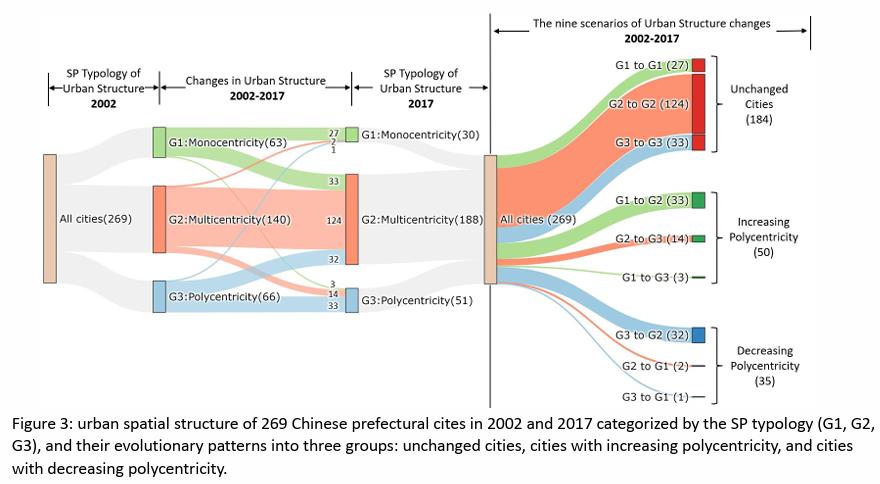
Growth and Change · 2024
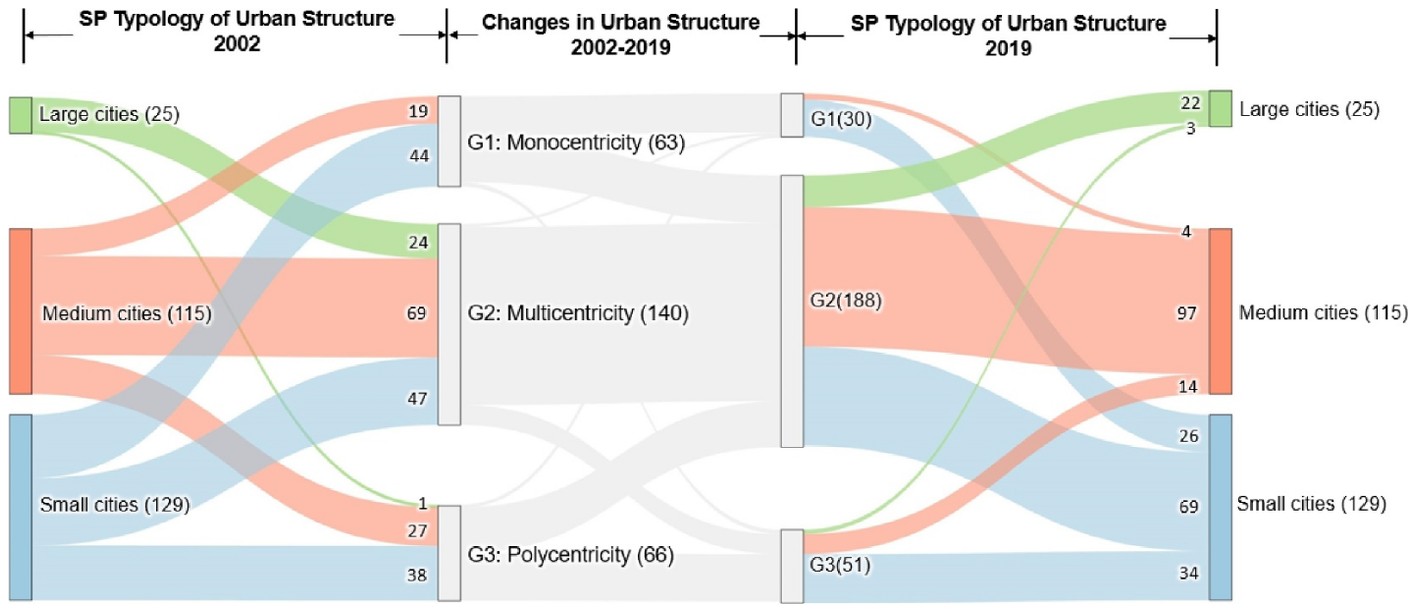
Traces the spatial structure of 269 Chinese prefectural cities from 2002 to 2019: mega-cities move steadily toward polycentricity, while smaller cities mostly stay monocentric.
Li, W., & Schmidt, S. (2024). The spatial-temporal evolution of urban development patterns in Chinese cities: Dynamics and interpretations. Growth and Change, 55(2), e12722.
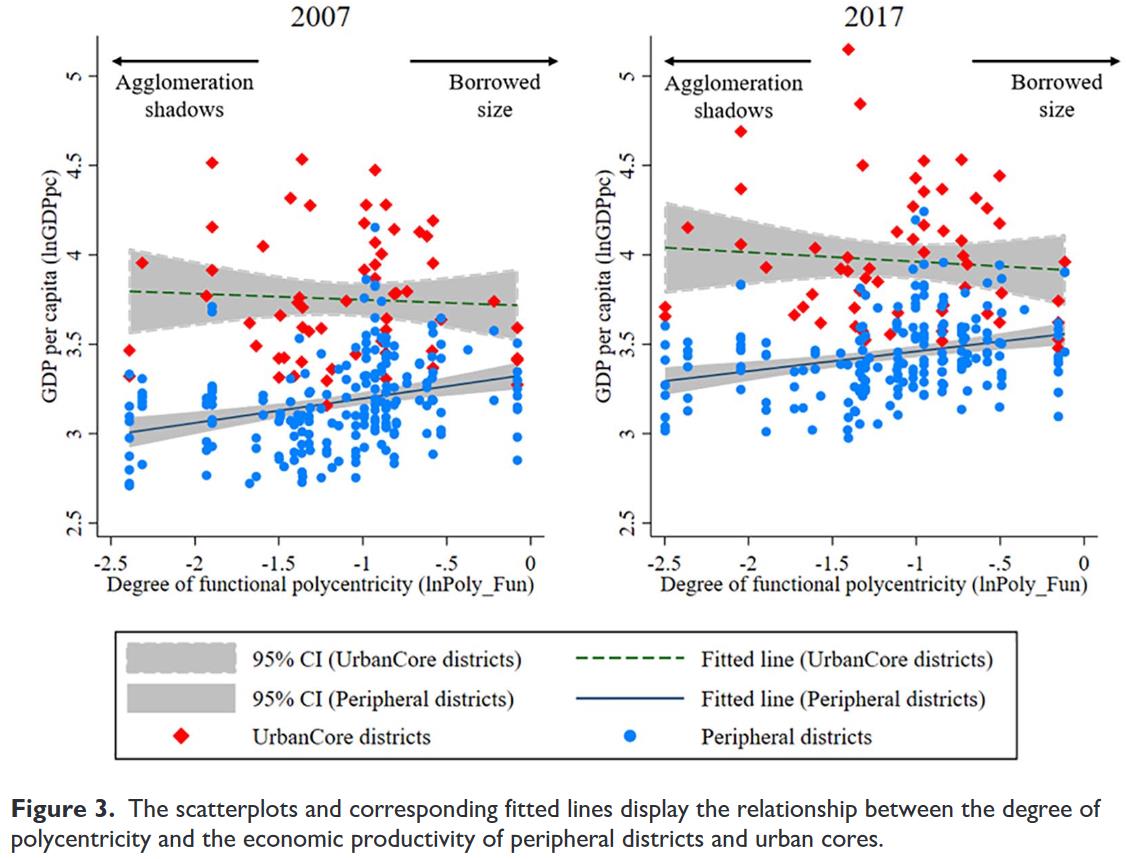
Environment and Planning A: Economy and Space · 2023
Tests whether polycentric development can deliver growth and equity at once in German city regions. It narrows regional disparities, but the peripheries' gains cancel out the cores' losses.
Li, W., Schmidt, S., & Siedentop, S. (2023). Can polycentric urban development simultaneously achieve both economic growth and regional equity? A multi-scale analysis of German regions. Environment and Planning A: Economy and Space. Advance online publication.
 Planning institutions, governance, and public space›
How planning frameworks and the fragmentation of local government shape what gets built and what gets protected — from cross-national planning systems to metropolitan open space and downtown pedestrian streets.
3 papers
How planning frameworks and the fragmentation of local government shape what gets built and what gets protected — from cross-national planning systems to metropolitan open space and downtown pedestrian streets.
3 papers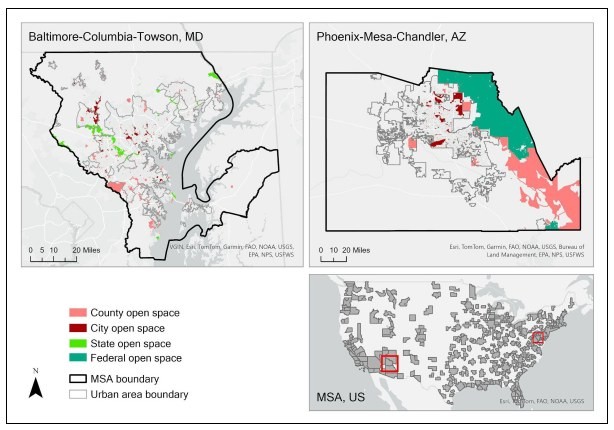
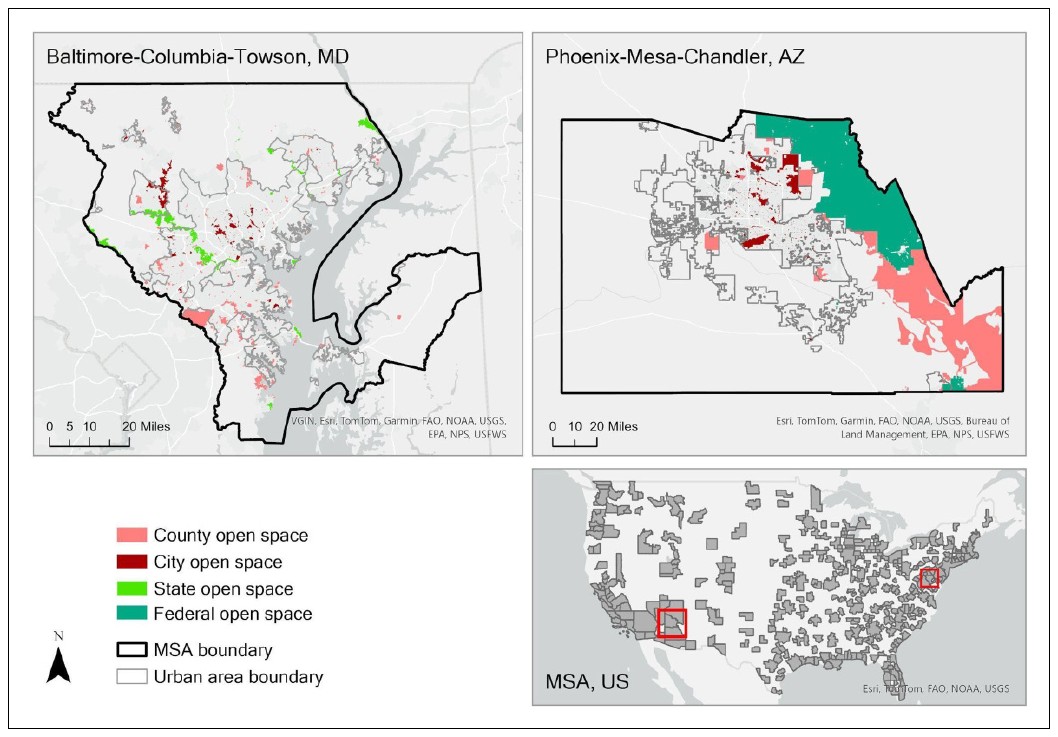
Municipal fragmentation and metropolitan open space patterns
Urban Affairs Review · 2026
Fragmented metropolitan governance produces more small and medium parks within a 10-minute walk, but fewer large ones. The threshold sits at roughly 10 acres — where a park stops being a neighborhood amenity and starts being a regional public good.
Schmidt, S., & Li, W. (2026). Municipal fragmentation and metropolitan open space patterns. Urban Affairs Review. Advance online publication.
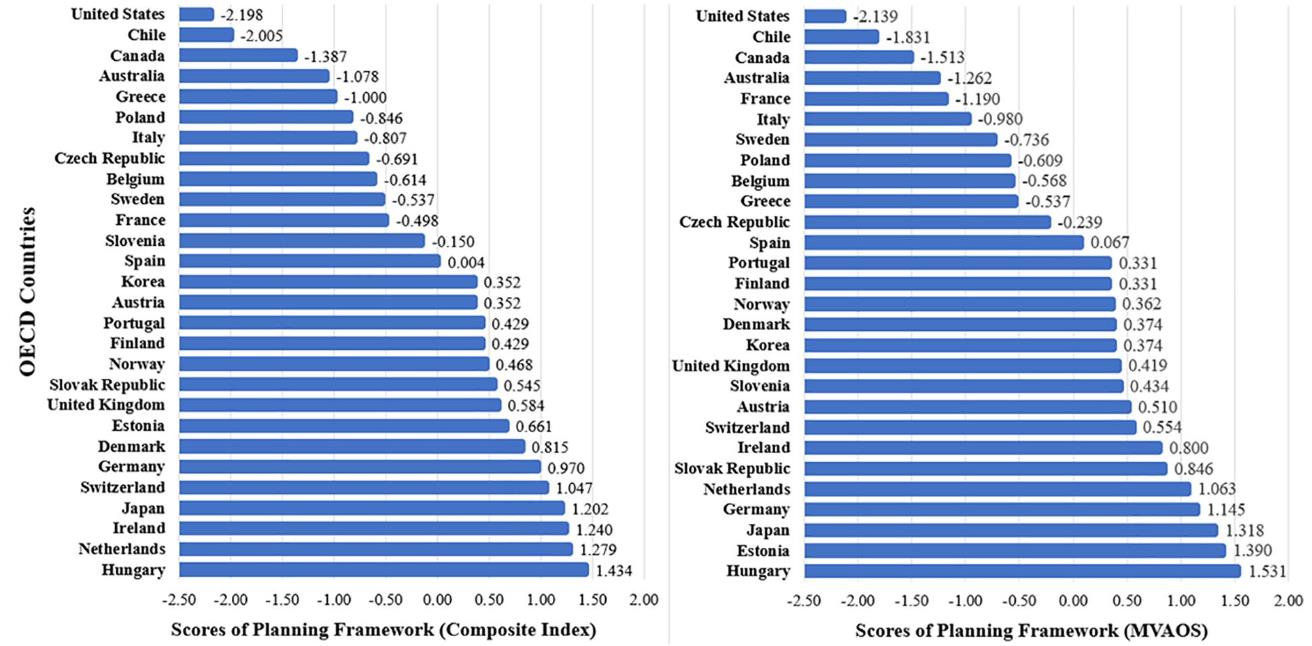
Planning Institutions and Urban Spatial Patterns: Evidence from a Cross-National Analysis
Journal of Planning Education and Research · 2021
Builds a composite index of national planning frameworks and links institutional design to how compact metropolitan development turns out.
Schmidt, S., Li, W., Carruthers, J., & Siedentop, S. (2021). Planning institutions and urban spatial patterns: Evidence from a cross-national analysis. Journal of Planning Education and Research. Advance online publication.
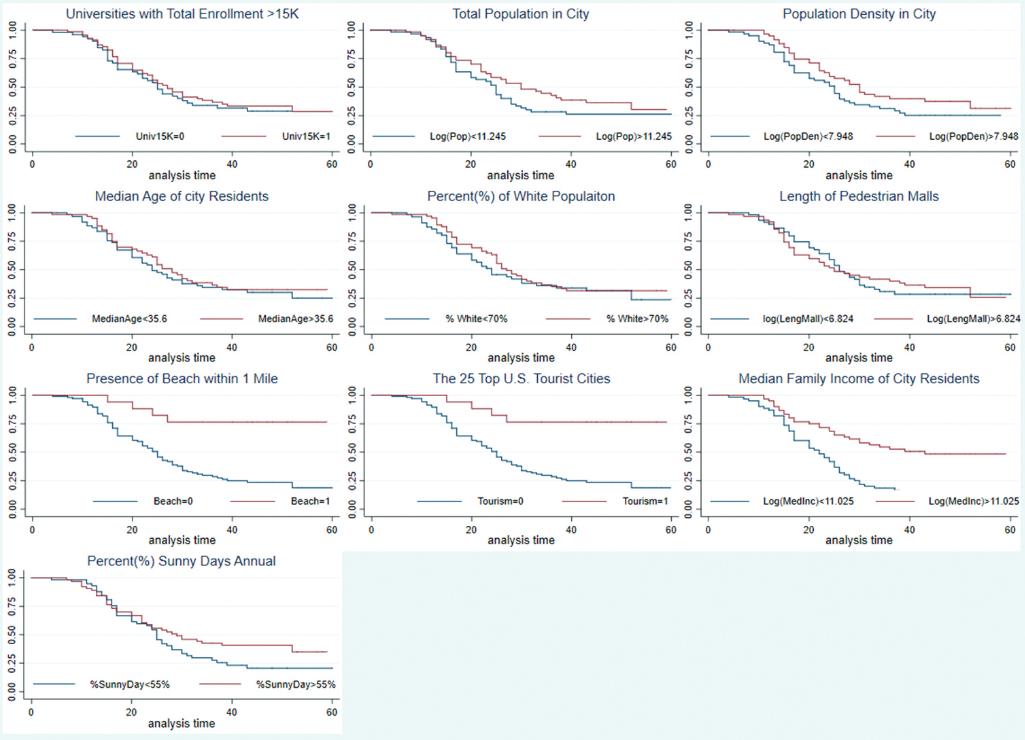
The rise and fall of the American pedestrian mall
Journal of Urbanism · 2021
A survival analysis of more than 120 post-war American pedestrian malls, asking why some were reopened to cars while others still thrive.
Matuke, S., Schmidt, S., & Li, W. (2021). The rise and fall of the American pedestrian mall. Journal of Urbanism: International Research on Placemaking and Urban Sustainability, 14(2), 129–144.
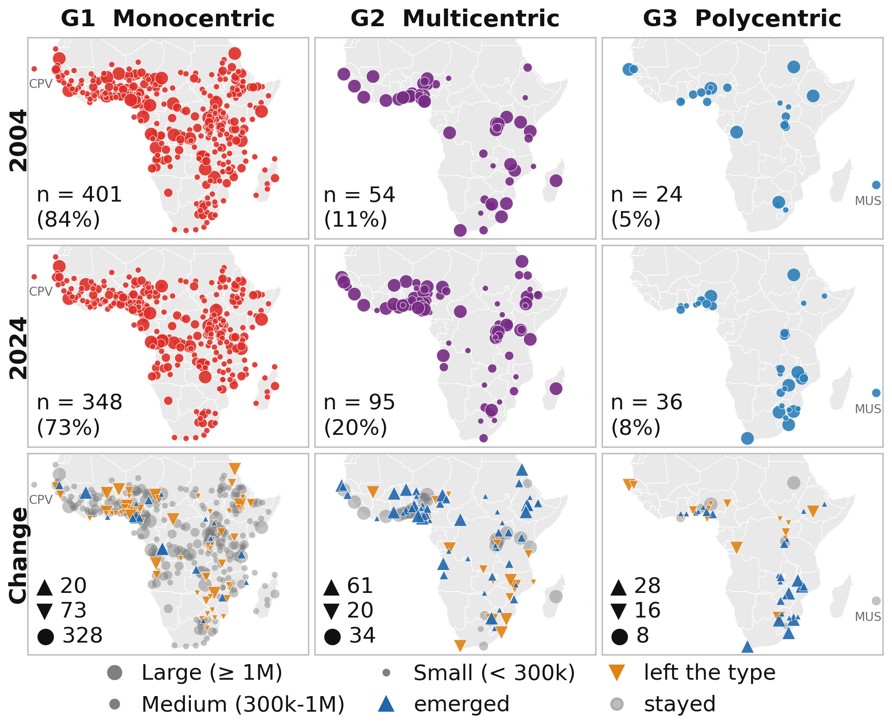 Urbanization and place in the Global South›
Adapting urban spatial analysis to data-scarce, rapidly urbanizing settings in Sub-Saharan Africa, and listening to how residents on the peri-urban fringe experience the city arriving around them.
2 papers
Adapting urban spatial analysis to data-scarce, rapidly urbanizing settings in Sub-Saharan Africa, and listening to how residents on the peri-urban fringe experience the city arriving around them.
2 papers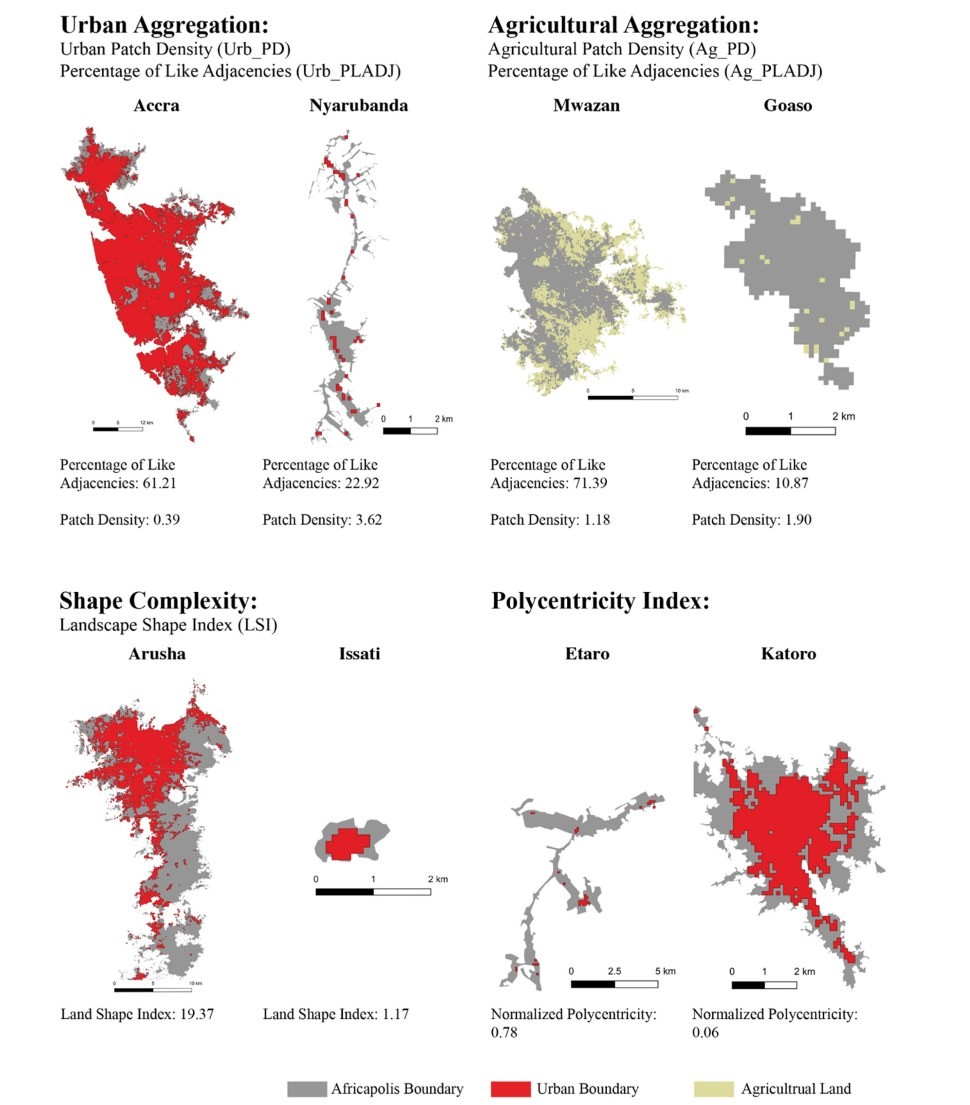
Remote Sensing Applications: Society and Environment · 2026
Adapts conventional urban morphology metrics to data-poor settings across 388 African settlements. Peri-urban agricultural cohesion emerges as a significant cooling factor, and irregular, ribbon-like settlement shapes as a source of stronger heat.
Schmidt, S., Zhang, Y., Li, W., & Li, H. (2026). Urban morphology and the heat island effect in African cities: Evidence from Ghana, Togo, and Tanzania. Remote Sensing Applications: Society and Environment, 42, 102005.
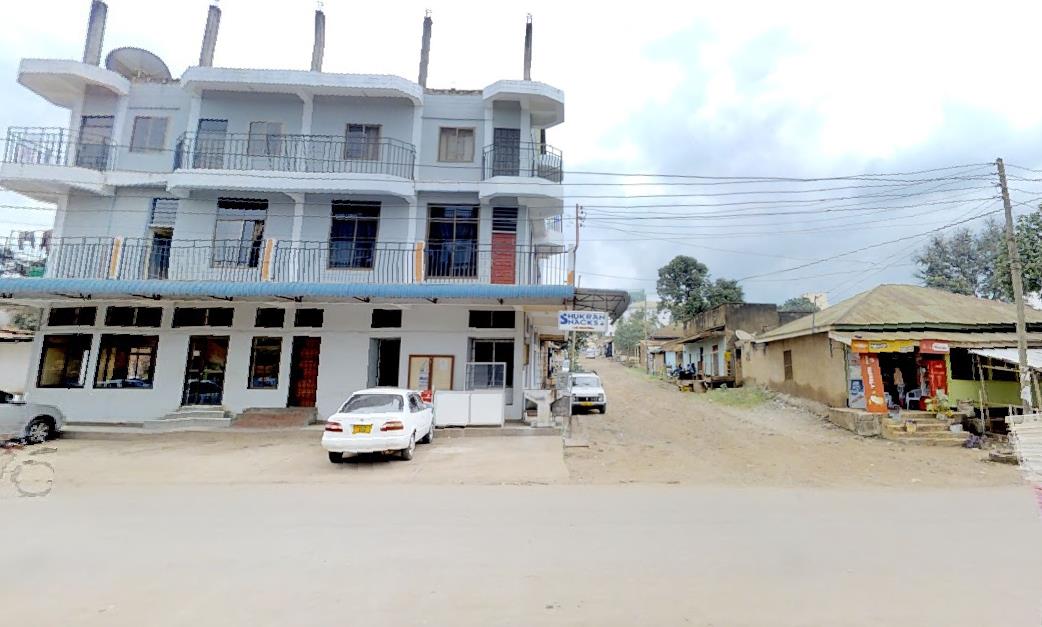
Place attachment, regional identity and perceptions of urbanization in Moshi, Tanzania
Habitat International · 2024
A survey of some 700 residents around Moshi, Tanzania, finding that place attachment falls from rural to urban locations and rises among those who see the city as a threat.
Schmidt, S., Nuhu, S., Thomas, R., & Li, W. (2024). Place attachment, regional identity and perceptions of urbanization in Moshi, Tanzania. Habitat International, 150, 103132.