
Population and Employment Dynamics in China: Evidence of a Perfect Storm Gathering
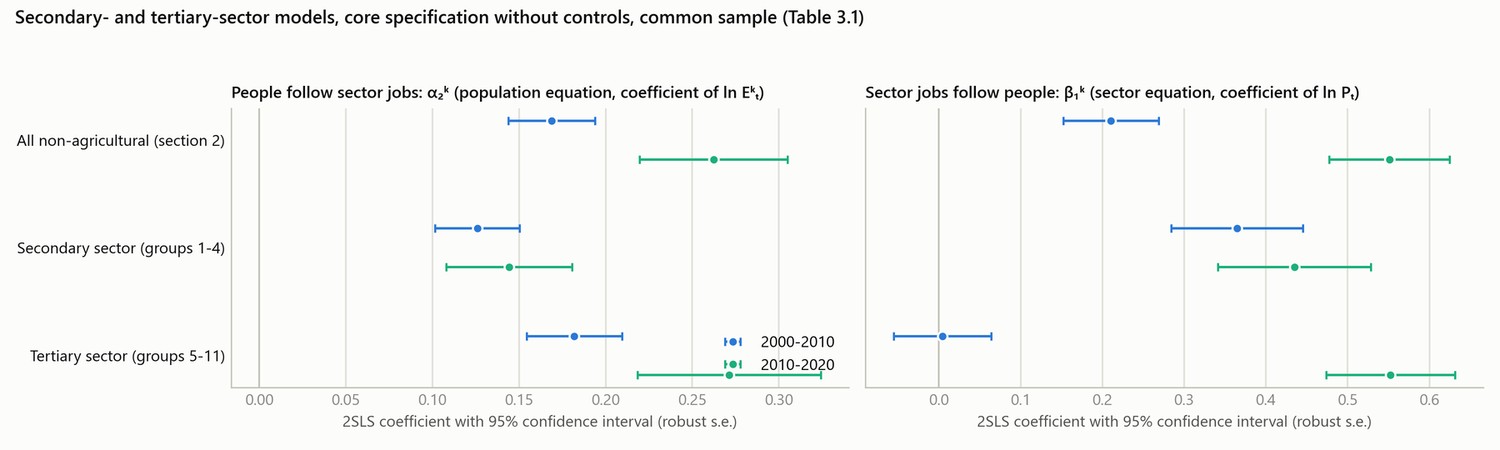
This study investigates whether people move for jobs or jobs move for people across Chinese prefectural regions, utilizing the regional adjustment model for two time periods: 2002-2010 and 2010-2019. Our findings suggest a diminishing role of job opportunities in attracting population growth over the past two decades, with urban and amenities rising in importance for locational decisions. A notable shift occurred between the two periods: population growth, previously not influencing job creation between 2002 and 2010, turned crucial from 2010 to 2019, emphasizing the increasing importance of skilled labor to firms. Segmenting employment into basic and non-basic sectors revealed that the growth of the former is crucial for catalyzing the expansion of the latter, echoing the economic base theory, which submits that basic sectors are foundational to the development of non-basic sectors. Additionally, we found that, while fixed asset investment remained a steady employment growth driver, the role of foreign direct investment (FDI) waned over time, pointing to a shift in the factors influencing job creation.